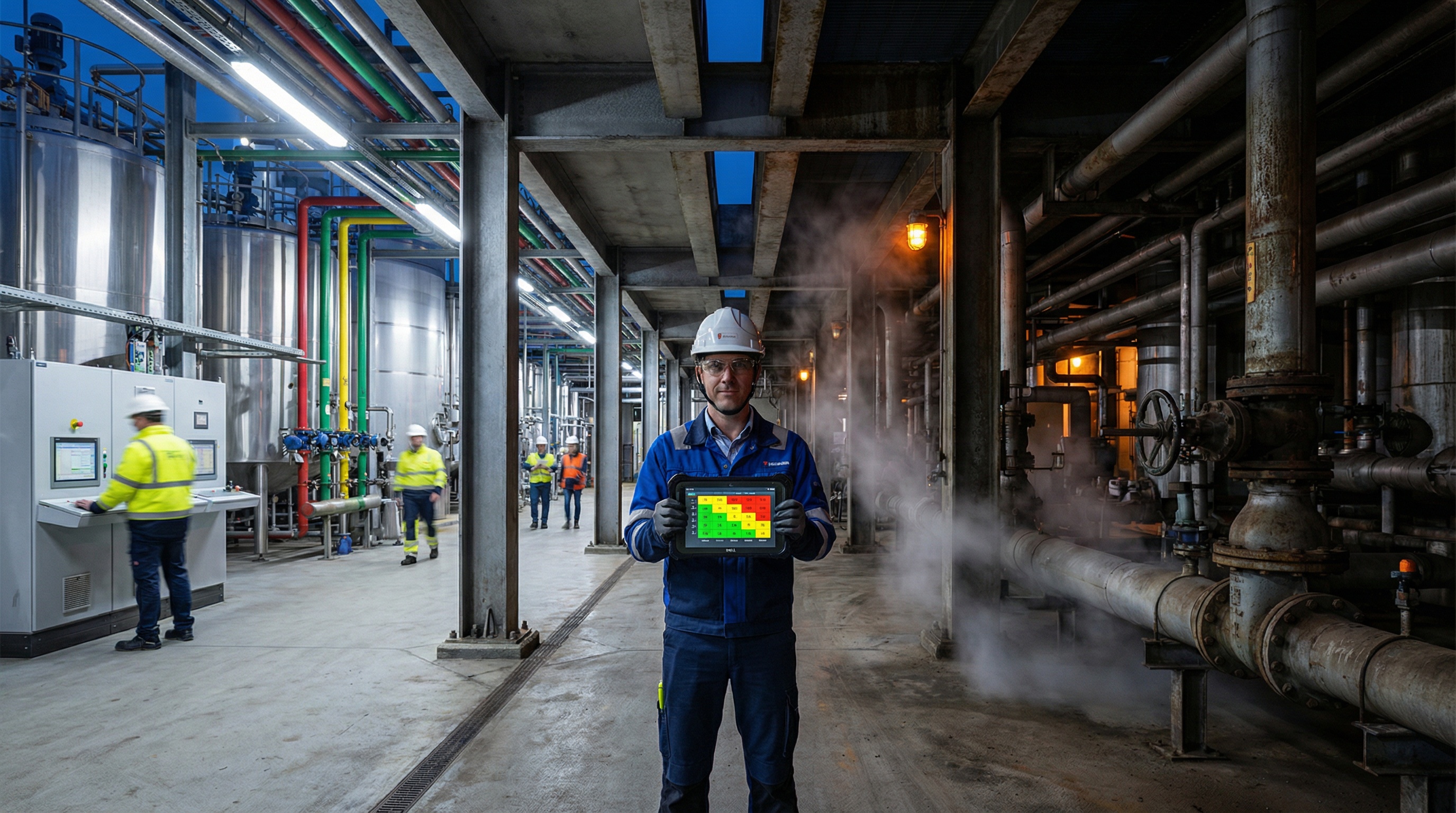
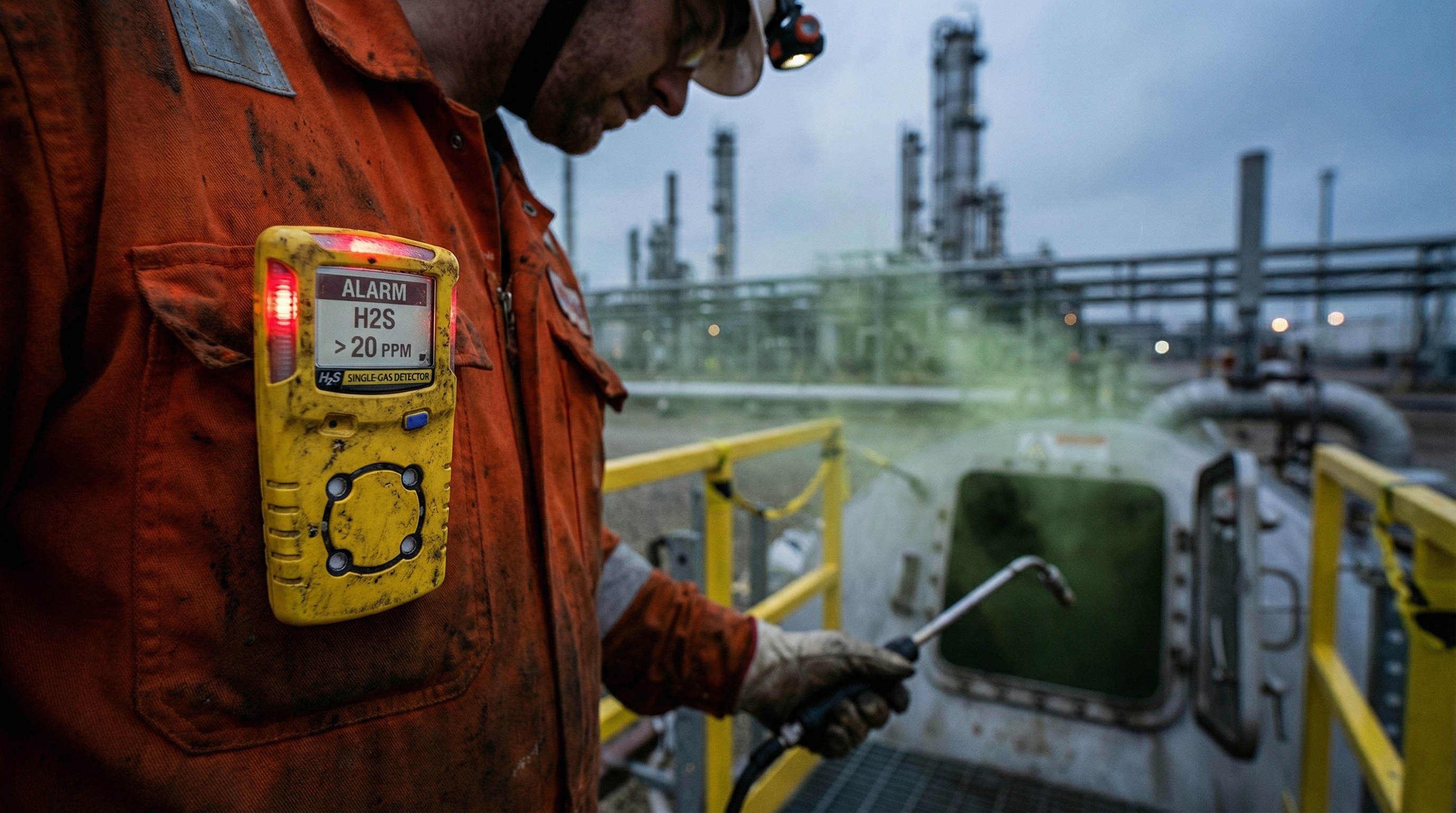
Hydrogen sulfide (H₂S) is one of the most hazardous gases present in numerous industrial processes, particularly in sectors such as petrochemicals, wastewater treatment, mining, and natural gas production. Its presence represents a critical risk to worker safety, equipment integrity, and operational continuity.
Why is H₂S so dangerous?
• High toxicity: Even at low concentrations, H₂S can cause severe health effects, ranging from eye and respiratory irritation to loss of consciousness and death due to respiratory failure.
• Deceptive odor: Although it has a characteristic rotten egg smell, H₂S can paralyze the sense of smell at higher concentrations, preventing detection by human senses.
• Flammability: It is a flammable gas capable of forming explosive mixtures with air, increasing the risk of fires in industrial environments.
Risk assessment: key to prevention
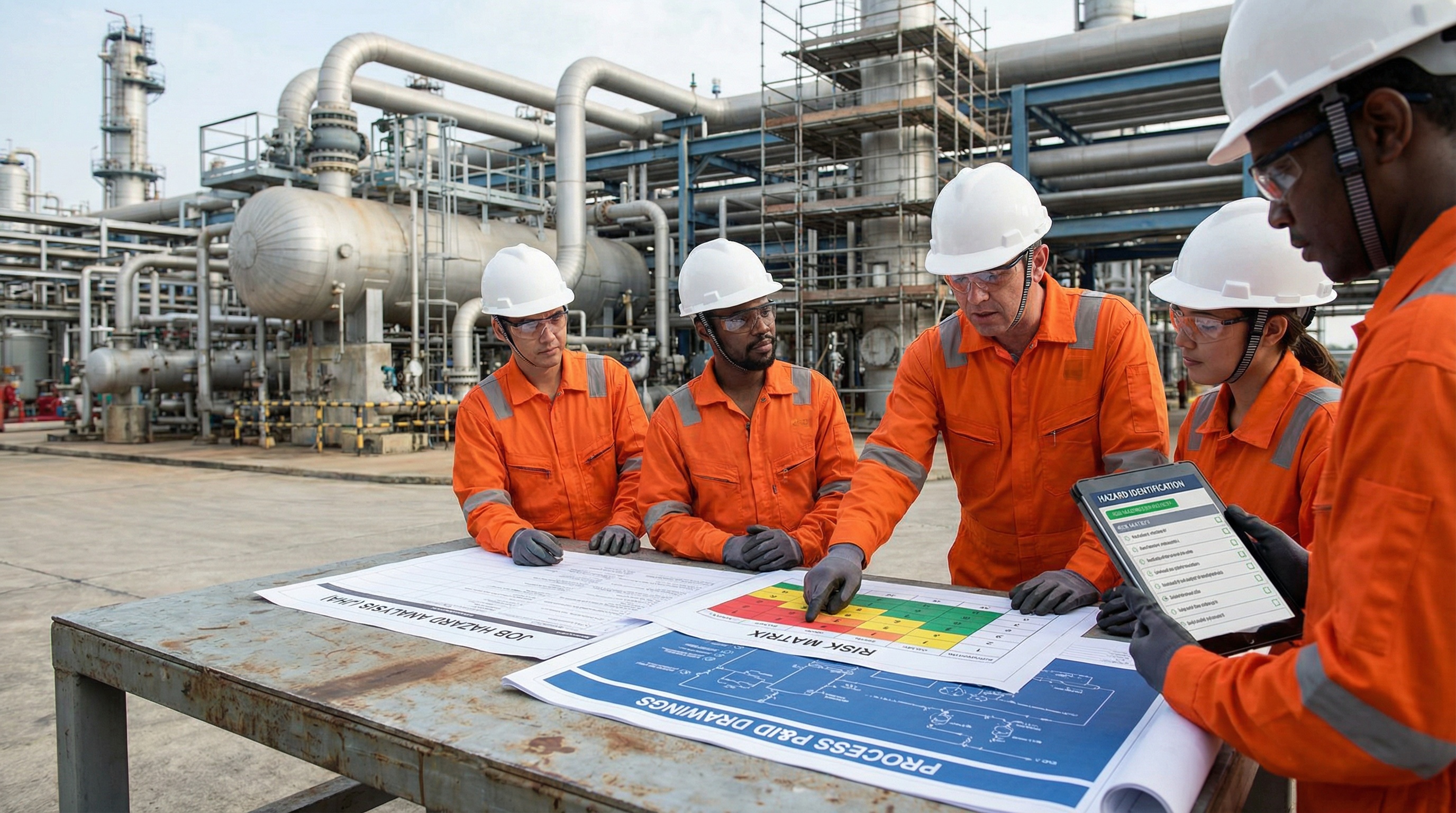
Effective H₂S risk management begins with a rigorous assessment that should include:
• Identification of potential sources: Tanks, reactors, wells, process lines, and storage areas.
• Continuous monitoring: Use of fixed and portable sensors to detect hazardous concentrations in real time.
• Scenario modeling: Simulation of leaks, atmospheric dispersion, and potential consequences for personnel and facilities.
• Hazardous area classification: Determining exposure zones and establishing access controls.
Control and protection measures
• Inherently safer process design: Implementation of closed systems, automatic shutoff valves, and adequate ventilation.
• Personal protective equipment (PPE): Appropriate respirators, chemical-resistant suits, and eye protection.
• Ongoing training: Instruction on detection, emergency response, and proper use of PPE.
• Emergency planning: Clear procedures for evacuation, first aid, and internal communication.
Understanding the hazards of H₂S and properly assessing its risks is not only a regulatory requirement but also an ethical and operational responsibility. Industrial process safety depends on a preventive culture grounded in technical knowledge, continuous monitoring, and emergency preparedness. Investing in safety is investing in sustainability, productivity, and life.