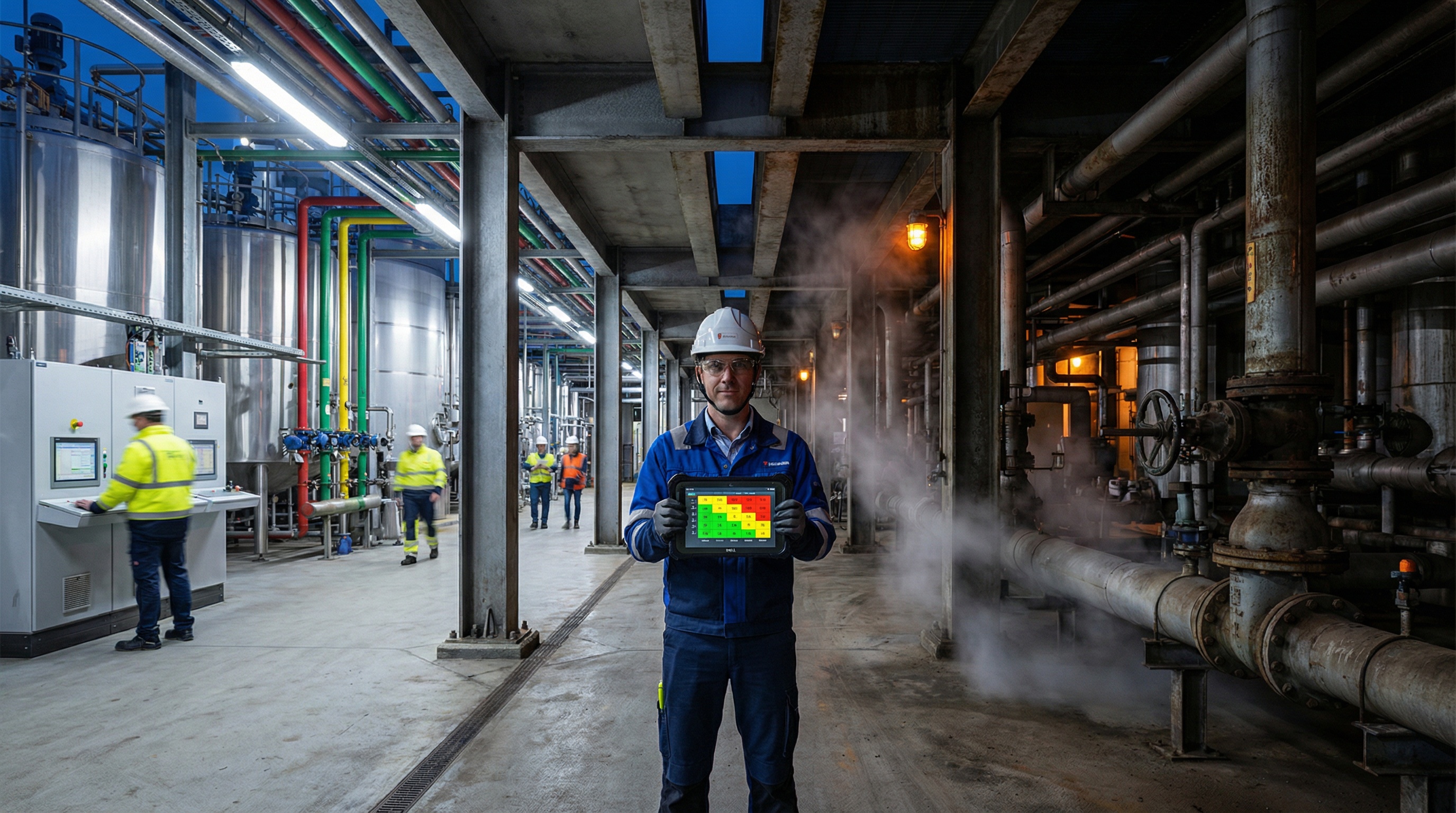
La seguridad en los procesos industriales no es solo una exigencia normativa: es una inversión estratégica que protege vidas, activos y reputación. En entornos donde la precisión y la eficiencia son críticas, cualquier falla puede desencadenar consecuencias graves. ¿Tus procesos están realmente protegidos o solo cumplen lo básico?
Este artículo te guía por los riesgos ocultos que acechan en instalaciones industriales y te ofrece herramientas prácticas para fortalecer tu sistema de seguridad.
1. Identificación de riesgos ocultos
Muchos peligros no son evidentes a simple vista. Algunos ejemplos incluyen:
- Corrosión interna en tuberías que no se detecta en inspecciones visuales.
- Errores humanos repetitivos por falta de capacitación o fatiga.
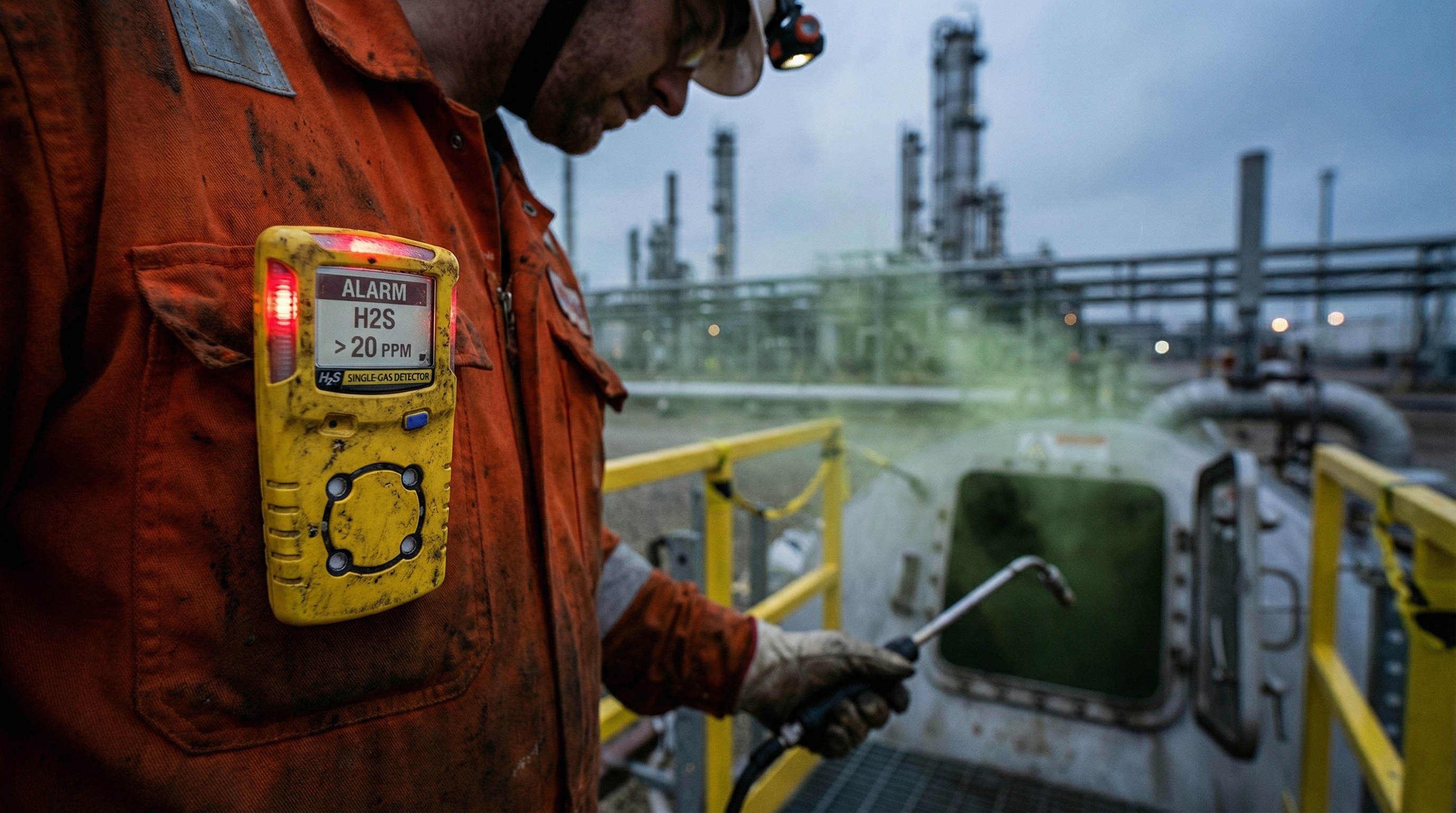
- Alarmas ignoradas por sobrecarga de señales en salas de control.
Solución: Implementa auditorías periódicas, simulacros realistas y sensores inteligentes que detecten anomalías antes de que se conviertan en emergencias.
2. El factor humano: capacitación y cultura preventiva
El 80% de los accidentes industriales involucran errores humanos. La solución no es solo capacitar, sino crear una cultura de seguridad:
- Programas de formación continua.
- Incentivos por reportar condiciones inseguras.
- Líderes que modelan comportamientos seguros.
Ejemplo: En una planta alimentaria, la implementación de “pausas de seguridad” antes de cada turno redujo los incidentes en un 40%.
3. Tecnología como aliada: automatización y monitoreo
La digitalización permite anticipar fallos y optimizar la respuesta:
- SCADA y PLCs para monitoreo en tiempo real.
- Sistemas de parada automática ante condiciones críticas.
- Gemelos digitales para simular escenarios de riesgo.
Caso práctico: En una refinería, el uso de sensores de presión conectados a IA permitió detectar una fuga antes de que se volviera explosiva.
4. Herramientas de análisis de riesgos
Aplicar metodologías estructuradas mejora la toma de decisiones:
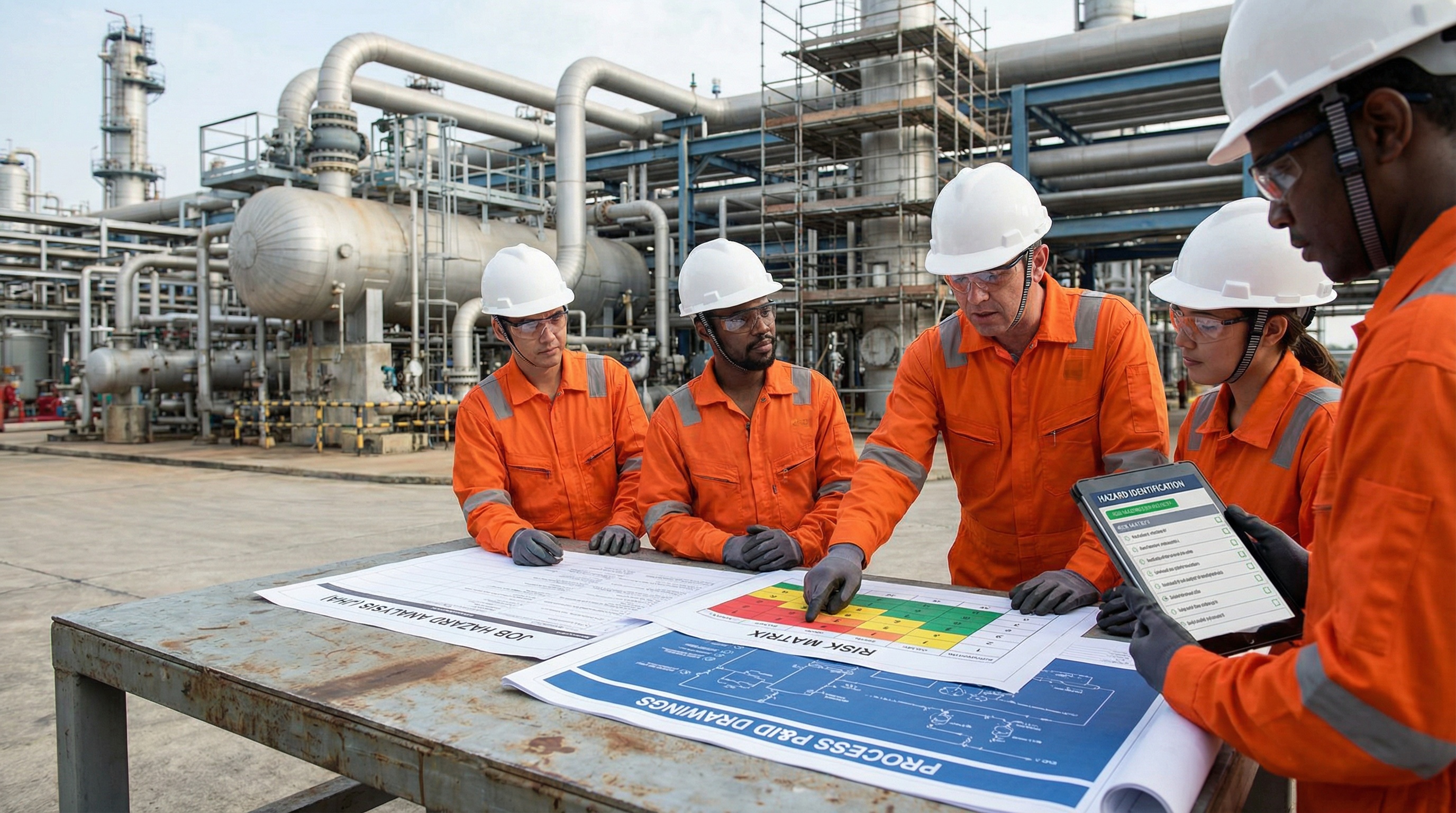
| Herramienta | Aplicación | Beneficio |
|---|---|---|
| HAZOP | Procesos Químicos | Identifica desviaciones |
| FMEA | Equipos Mecánicos | Prioriza fallos críticos |
| LOPA | Sistemas de Protección | Evalúa capas de defensa |
Estas herramientas permiten anticipar escenarios y diseñar respuestas efectivas.
5. Equipos de protección y protocolos de emergencia
Contar con EPP no basta: debe estar alineado con los riesgos reales.
- SCBA en atmósferas tóxicas
- Trajes ignífugos en zonas de alta temperatura
- Simulacros de evacuación y rescate
Recomendación: Evalúa el EPP según el tipo de industria y actualiza los protocolos cada seis meses.
Ejemplos por industria
Petroquímica:
Riesgo: fugas de gases inflamables.
Solución: detección por infrarrojos y válvulas automáticas.
Alimentaria:
Riesgo: contaminación cruzada.
Solución: zonas separadas y control de acceso.
Metalúrgica:
Riesgo: quemaduras por metales fundidos.
Solución: barreras físicas y trajes térmicos.
La seguridad industrial no es un destino, sino un proceso continuo. Evaluar, adaptar y mejorar debe ser parte del ADN de toda operación. No basta con cumplir: hay que anticiparse.
¿Estás listo para transformar tu enfoque de seguridad?
Haz de la prevención tu ventaja competitiva.