
Training
Courses and certifications designed for field readiness.
Behavior-Based Safety (BBS)
On-Site TrainingTo ensure participants acquire the knowledge, skills, and attitudes related to Behavior-Based Safety (BBS) within the organization, thereby promoting safety and health among all workers.Target Audience:Hourly personnel, managers, engineers, industrial safety supervisors, operational and maintenance supervisors, members of the occupational safety and health committee, and professionals responsible for the Occupational Safety and Health Management System.Format: On-siteNumber of Participants: 15Instructor: M.Sc. Luis Alfonso Sánchez ContentIntroduction to workplace behaviorAccident rates, current situation, and incident occurrenceBasic elements of safe workBehavior-Based Safety (BBS) fundamentalsReview of the main BBS methodologiesBehavioral Psychology: Understanding how psychological factors influence human behavior in the context of workplace safety.Risk Analysis: Identification and evaluation of risks associated with human behavior in the workplace, and how to mitigate them through BBS.Design and Implementation of BBS Programs: Development of effective strategies and programs to promote safe behaviors among workers.Communication and Safety Leadership: Exploration of effective communication techniques and leadership practices to foster a behavior-based safety culture.This program strengthens the human factor within safety management systems by aligning behaviors with organizational safety objectives.
Basic Work Permit System
On-Site TrainingThe Work Permit System enables tasks and activities to be performed under safe conditions by applying established procedures and techniques, with the objective of preventing major accidents in classified facilities, in accordance with Decree 1347 of 2021.This course is intended for company personnel working in the oil, gas, and petrochemical industries, as well as resident engineers or operational supervisors from contractor companies who may be authorized to sign work permits, and OHS supervisors from contractor companies within the IPPN sector.Format: On-siteDuration: 24 hoursNumber of Participants: 15Instructor: M.Sc. Luis Alfonso Sánchez Module 1Basic Safety FundamentalsFirst AidPortable Fire Extinguishers (Basic)Hazardous Atmosphere EvaluationWork Procedures Module 2Job Risk AnalysisSafe Work PracticesExcavation SafetyConfined Space SafetyWorking at HeightsLifting OperationsCutting and WeldingSandblasting OperationsRadiation ProtectionWork Permit Standards and FormsThis training provides the foundational knowledge required to properly implement and manage a Work Permit System in high-risk industrial environments.
Management of Change (MOC)
On-Site TrainingManagement of Change establishes the relevant guidelines, in accordance with the SGS-PAM framework, to safely evaluate, approve, document, and communicate all changes whether temporary, permanent, or emergency-related aimed at preventing and controlling risks to worker health and safety, facility integrity, equipment reliability, the environment, and surrounding communities.It applies to workers, operational supervisors, OHS coordinators, and managers responsible for facilities classified under Decree 1347 of 2021.Format: On-siteNumber of Participants: 15Instructor: M.Sc. Luis Alfonso Sánchez ContentBasic definitionsContinuous improvement in Management of ChangeOperational impact of Management of ChangeIntroduction to national and international legislationChange requirementsChange workflow processRoles and responsibilities in Management of ChangeClassification of changesTypes of changeSGS-PAM elements associated with Management of ChangeIdentification and notification of risks related to processes and job positions in classified facilitiesCriteria for qualitative and quantitative risk analysisWork permit systemPre-startup safety review (PSSR)Required documentation and formsImplementation and communication of Management of ChangePractical example of a Management of Change processThis training provides a structured and regulatory-aligned approach to ensure that organizational, technical, or operational modifications do not introduce uncontrolled risk into high-hazard facilities.
Hazard and Operability Study (HAZOP)
On-Site TrainingThe HAZOP technique establishes the concepts, criteria, and tools necessary for identifying process risks in facilities handling chemical, flammable, and toxic substances, at specific levels of engineering and operation.It is intended for professionals in safety, production, maintenance, engineering, and inspection associated with the metallurgical, chemical, petrochemical, mining, oil, and gas industries.Format: On-siteDuration: 16 hoursInstructor: M.Sc. Luis Alfonso Sánchez WHAT KNOWLEDGE WILL YOU ACQUIRE THROUGH THIS TRAINING?IntroductionGeneral concepts of process risk analysis.Basic review of the technique and its relationship with standards:IEC 61511IEC 61882CFR 1910.119 / OSHA Publication 3132Process risk analysis: applicationIndustrial backgroundBasic definitionsQualitative Risk AnalysisApplicable methodologies for hazard identification according to the engineering phase.Main additional qualitative risk identification methodologies.Risk MatrixRisk matrix: development, application, and characteristics.HAZOP MethodologyDefinitionsStrengths and weaknesses of the techniqueTerminology associated with the methodGuide wordsProcess variablesDeviationsResponsibilities of the study teamNode selection and definitionDocumentation required for the risk analysis:Facility-specific safety study standards and proceduresProcess description documentControl and operating philosophyEquipment layout / plot planProcess Flow Diagram (PFD)Piping and Instrumentation Diagrams (P&ID)Cause and Effect MatrixPrevious risk analysis studies (if applicable)Facility risk criteriaRisk matrixApplication CasesApplication formsDevelopment of the technique and when to apply itDifferences compared to other methodologiesExercise resolution by participantsThis training provides both the theoretical foundation and practical application required to conduct structured and effective HAZOP studies in industrial environments.
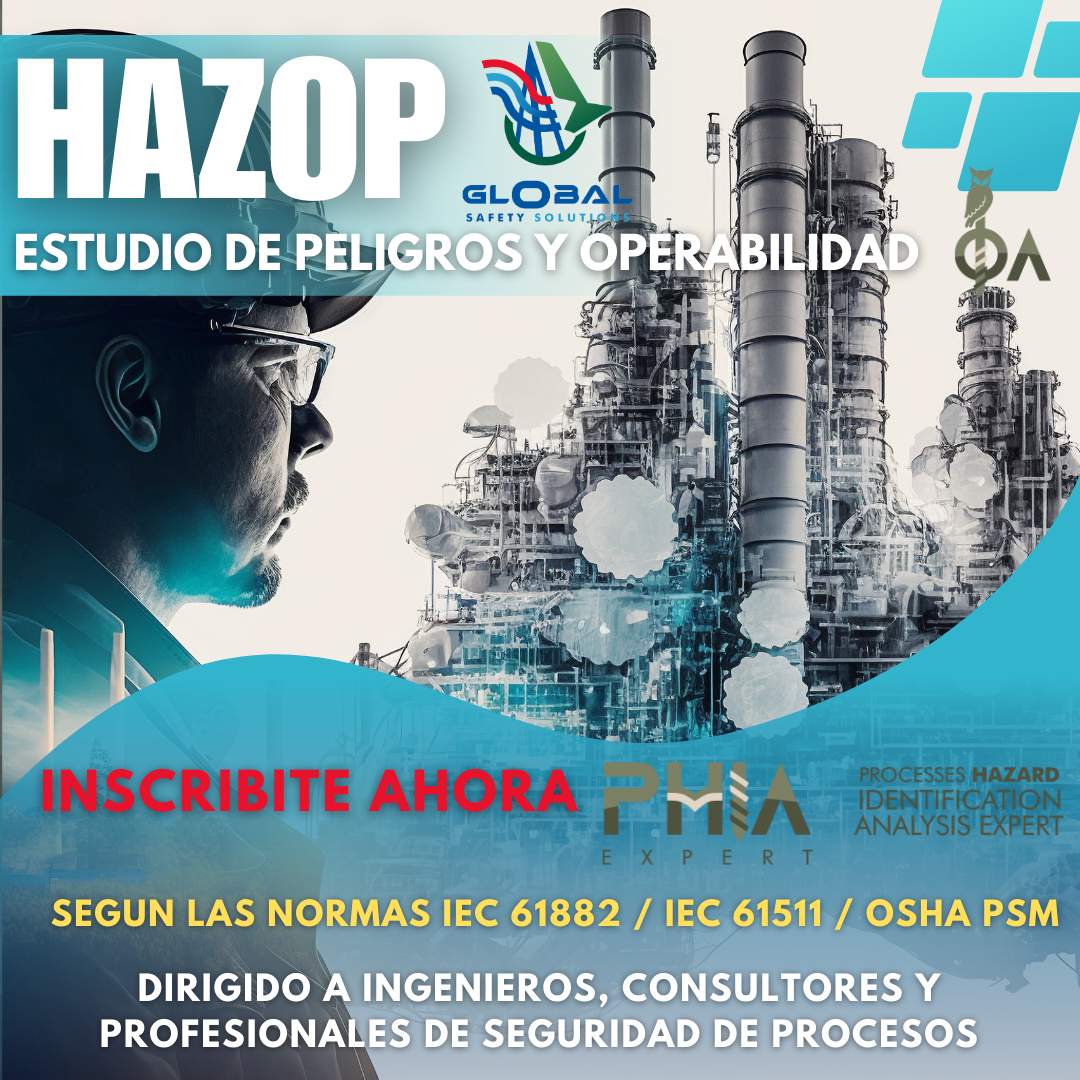
HAZOP: Hazard and Operability Study
Zona VirtualCourse ObjectiveUpon completion of this course, participants will be able to understand and apply the HAZOP methodology in a structured and effective manner through knowledge of the international regulatory framework governing these studies, identification of the essential baseline information required for their development, and analysis of the key organizational elements involved.Participants will acquire the competencies necessary to properly prepare, conduct, close, and document a HAZOP study, ensuring the accurate development of the final report (deliverable). Target AudienceThis course is intended for professionals and specialists who participate directly or indirectly in the lifecycle of industrial process facilities, including conceptual and detailed engineering, design, consulting, construction, maintenance, commissioning, and plant startup phases.It is especially designed for engineers, supervisors, technical leaders, and safety professionals responsible for the identification, evaluation, and management of process risks.The program provides significant value to professionals involved in disciplines such as process engineering, process safety, operations, maintenance, instrumentation and control, functional safety, asset integrity, and operational reliability, as well as those responsible for Process Safety Management (PSM), industrial safety, and environmental protection systems.The course is also highly recommended for consultants, auditors, HAZOP leaders, and multidisciplinary team members seeking to strengthen their competencies in accordance with international standards and best practices, including guidelines from IEC, ISO, API, and global regulatory authorities, contributing to risk reduction, prevention of major accidents, and regulatory compliance in process facilities. Course ScopeFundamentals and International Regulatory FrameworkThe course will cover the core principles of the HAZOP methodology within the context of major international standards and guidelines, including IEC 61882, IEC 61511, OSHA Process Safety Management (PSM), and best practices recommended by the Center for Chemical Process Safety (CCPS®).Methodology and Specialized TerminologyKey concepts, technical terminology, and the methodological structure of HAZOP studies will be examined in depth, along with information requirements, resource allocation, and planning elements necessary for effective analysis preparation.Practical Application of the MethodologyCase studies and practical exercises will be developed to support real-world application of the HAZOP methodology, enabling participants to strengthen their ability to identify deviations, causes, consequences, and safeguards (applicable in classroom-based training).Records Management and Technical DocumentationThe course will address the proper preparation and control of HAZOP worksheet records, efficient use of specialized tools such as PHIA-Expert®, and preparation of technical documentation and reports associated with the study, in accordance with international best practices.Assignment of Responsibilities and Action ManagementClear guidelines will be established for defining HAZOP team roles and responsibilities, as well as for tracking, closing, and verifying recommendations and actions resulting from the analysis.Integration into the Process Safety Management (PSM) SystemThe course will examine how HAZOP studies are effectively integrated within a Process Safety Management (PSM) system, aligned with the CCPS® framework, contributing to continuous improvement, management of change (MOC), and prevention of major process incidents.
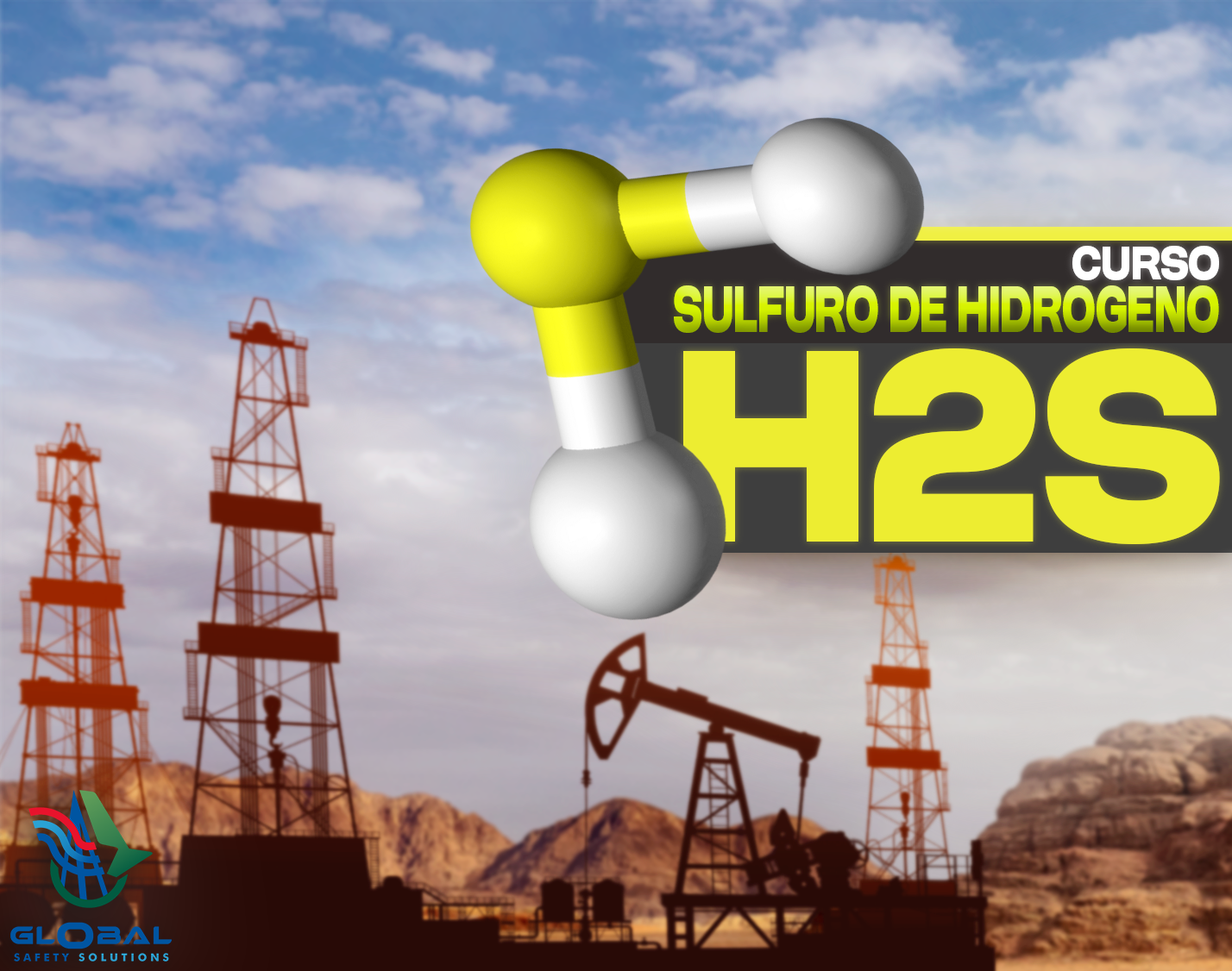
Hydrogen Sulfide Awareness ANSI/ASSP-2024 Z390.1
Zona VirtualCourse ObjectivesThis course has been designed to provide participants with the technical knowledge and practical competencies required to identify, evaluate, and control risks associated with hydrogen sulfide (H₂S) in industrial environments. Upon completion, participants will be qualified to perform H₂S risk control functions in accordance with safety standards established under ANSI Z390.1.Course Objectives:Understand the physical, chemical, and toxicological properties of H₂S, as well as its effects on human health and the environment.Recognize areas with potential H₂S release, particularly in industries such as oil and gas, mining, wastewater treatment, and others.Apply preventive measures and engineering controls to minimize H₂S exposure.Demonstrate proper use of gas monitoring equipment and respiratory protection systems (SCBA and SAR) in accordance with international best practices.Respond effectively to H₂S exposure emergencies by following evacuation, rescue, and first aid protocols.Comply with applicable legal and regulatory requirements, including OSHA, NIOSH, API, and ANSI standards.Promote a proactive safety culture and shared responsibility regarding H₂S risk management.This course not only meets regulatory requirements but also strengthens professionalism, leadership, and response capability in high-risk work environments. Target AudienceThis course is designed for workers, supervisors, safety coordinators, and technical personnel operating in industries where there is potential exposure to hydrogen sulfide (H₂S), including:Oil and gas (upstream, midstream, and downstream)Wastewater treatment plantsMining and drilling operationsChemical and petrochemical industriesEmergency response and industrial rescue servicesContractors operating in areas classified as high-risk due to H₂S presenceIt is also intended for safety consultants, technical trainers, and HSE personnel seeking certification as H₂S risk control specialists in accordance with ANSI Z390.1 and international best practices. Course ScopeThis course covers the theoretical knowledge and practical competencies required for participants to effectively perform as specialists in the identification, evaluation, control, and emergency response to hydrogen sulfide (H₂S) exposure risks in industrial environments.
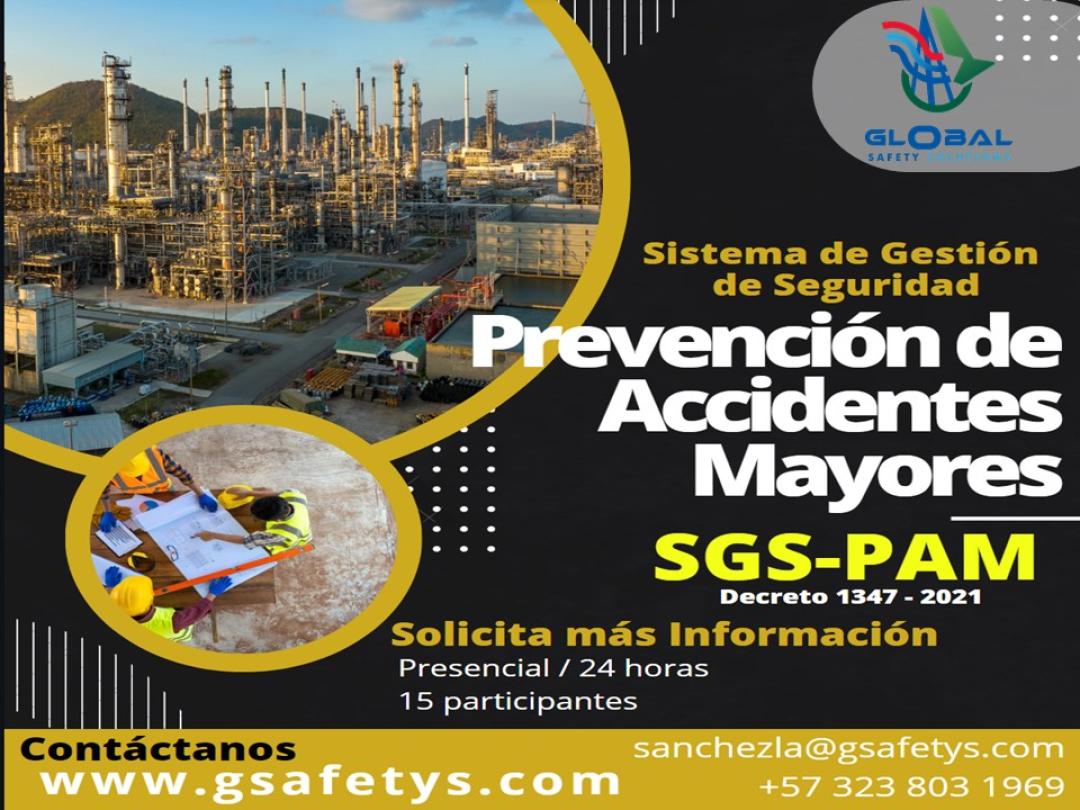
SGS-PAM – Major Accident Prevention Safety Management System
On-Site TrainingThe Major Accident Prevention Management System (SGS-PAM), included within the Major Accident Prevention Program (PPAM), contributes to increasing the safety levels of facilities classified under Decree 1347 of 2021, with the objective of protecting workers, the public, the environment, and infrastructure through comprehensive risk management.This program applies nationwide to natural and legal persons responsible for classified facilities both existing and new that handle hazardous chemical substances in quantities equal to or exceeding at least one of the threshold limits established in Decree 1347 of 2021.Occupational Health and Safety (OHS) professionals, engineers, supervisors, and managers responsible for facilities classified in accordance with Decree 1347 of 2021.Number of Participants: 15Duration: 24 hoursInstructor: M.Sc. Luis Alfonso Sánchez Major Accident Prevention Safety Management SystemIntroduction to the Major Accident Prevention ProgramMajor accident prevention policySafety informationHazard identification, risk analysis, and risk assessmentWorker participationOperating proceduresTrainingContractor evaluationPre-startup safety review (PSSR)Mechanical integrityWork permit systemsManagement of change (MOC)Emergency preparedness and responseIncident and major accident investigationPerformance indicatorsCompliance auditsManagement reviewMajor Accident Prevention ProgramList of hazardous chemicals associated with major accidents and threshold quantitiesRegistry of classified facilitiesSafety management system for major accident preventionEmergency and contingency plan (PECo)Safety reportMajor accident reportingIncident and major accident investigationInspection, surveillance, and control (IVC)Information available to the publicExchange of information related to major accidents with potential transboundary impactInformation for territorial risk management purposesInformation for land-use planning purposesThis program provides a structured framework to ensure regulatory compliance and strengthen preventive controls in high-risk industrial facilities.
Principle-Based Prevention Culture
On-Site TrainingPrinciple-Based Prevention CultureA Principle-Based Prevention Culture provides participants with the tools and knowledge necessary to lead and promote an organizational culture deeply rooted in prevention, fostering a safer and healthier work environment.A strong preventive culture establishes the theoretical, conceptual, and technical foundations of a safety management process aimed at positively influencing work-related behaviors and embedding them as part of the organization’s culture.Format: On-siteNumber of Participants: 15Target Audience: Professionals, OHS experts, supervisors, and managersInstructor: M.Sc. Luis Alfonso Sánchez ContentActive Workforce Participation: Promoting active involvement and employee empowerment in the proactive identification and mitigation of risks.Evaluation and Continuous Improvement: Methods to assess the impact of prevention culture, identify improvement areas, and implement strategies for ongoing development.Preventive mindsetThe three ideals of Occupational Safety and HealthPreventive culture: what it is and how to assess itPreventive culture workshop for OHS professionals and “culture facilitators”Behavior-Based Safety (BBS)Risk perceptionIntroduction to prevention culture (versions tailored for executives and managers, workers, or prevention professionals)Leadership and communicationThe eight fundamental principles for a safe workplacePreventive safety observationsSelf-care and care for othersTools for managing, coordinating, and optimizing internal programsEngagement strategies to develop a prevention cultureCommunication and influence for safe behaviors; effective workplace relationshipsIntroduction to emotional intelligence for OHS professionalsThis program equips leaders and safety professionals with the behavioral, organizational, and technical competencies required to transform prevention into a core organizational value.