Confined spaces are areas designed for specific tasks, such as tanks, sewers, or silos. They are not intended for continuous occupancy and, although they may often appear harmless, they can quickly become deadly traps without proper controls. This is where OSHA the Occupational Safety and Health Administration of the United States steps in to establish life-saving standards.
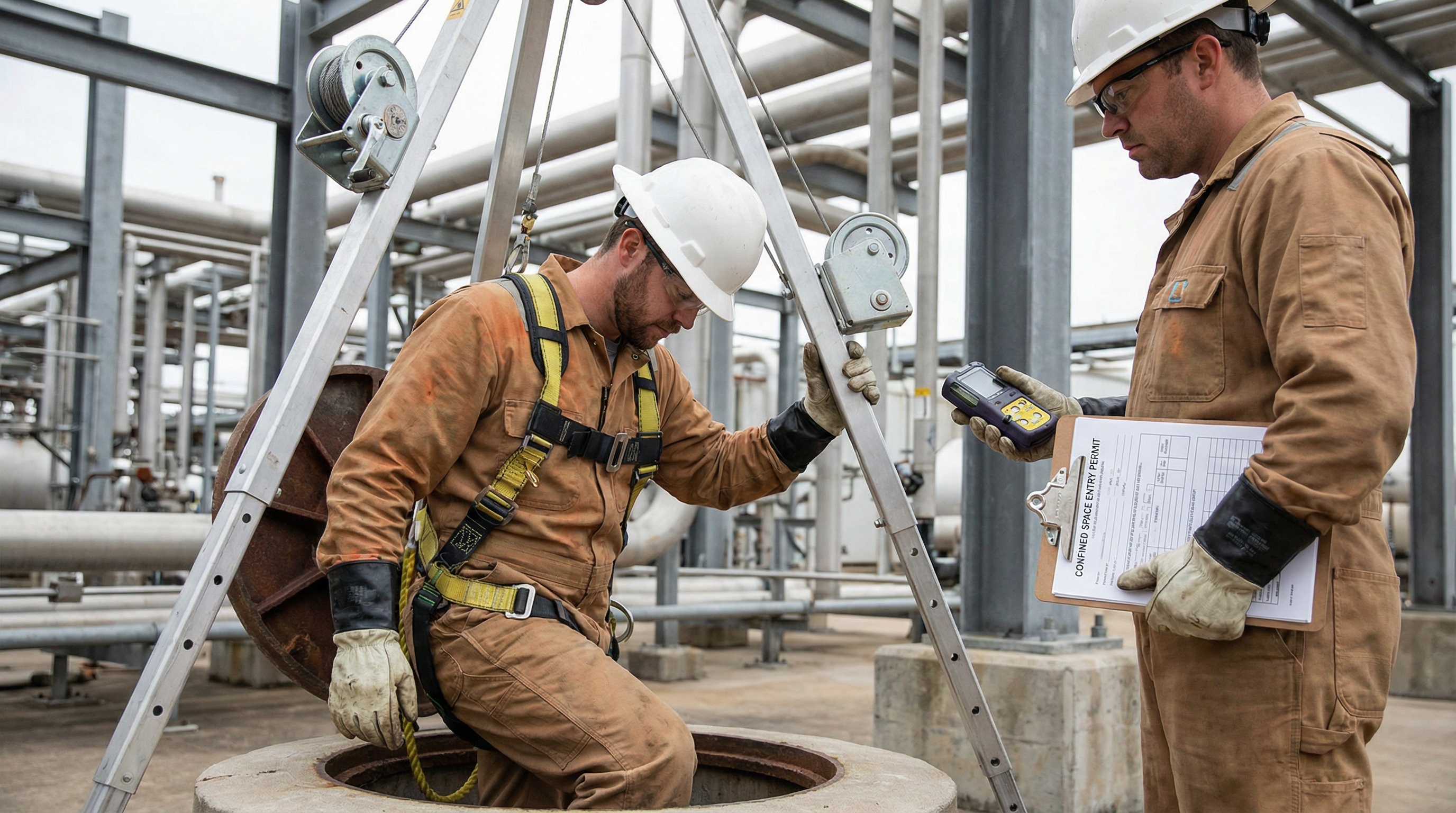
A confined space becomes even more dangerous when it includes hazards such as toxic atmospheres, oxygen deficiency, engulfment risks, or the presence of hazardous machinery. In such cases, OSHA requires entry permits to ensure the space has been properly evaluated and that conditions are safe for workers.
OSHA’s regulation emphasizes several key elements:
Identification: Employers must inspect and clearly label hazardous confined spaces.
Training: Workers and supervisors must be trained to recognize hazards and respond appropriately in emergencies.
Monitoring: Atmospheric testing before and during entry is essential to prevent toxic exposure or explosions.
Rescue Plans: A properly equipped external rescue team must be readily available in case of an emergency.
In summary, these standards not only prevent accidents but also create a work environment where employees feel protected and valued. At the end of the day, no task is worth more than a worker’s life.