What is the Hazard Communication Standard (HCS)?
The HCS (29 CFR 1910.1200) is an OSHA regulation requiring employers to communicate chemical hazards to employees. It aligns with the Globally Harmonized System (GHS) for classifying and labeling hazardous substances, ensuring a universal understanding.
Why is it Important?
- Protects workers from dangerous chemical exposures.
- Reduces workplace accidents and illnesses related to chemicals.
- Ensures legal compliance, avoiding OSHA fines (which can exceed $15,625 per violation).
The 5 Key Elements of HazCom
1️⃣ Chemical Inventory
Every workplace must maintain an updated list of hazardous chemicals on-site.
2️⃣ Safety Data Sheets (SDS)
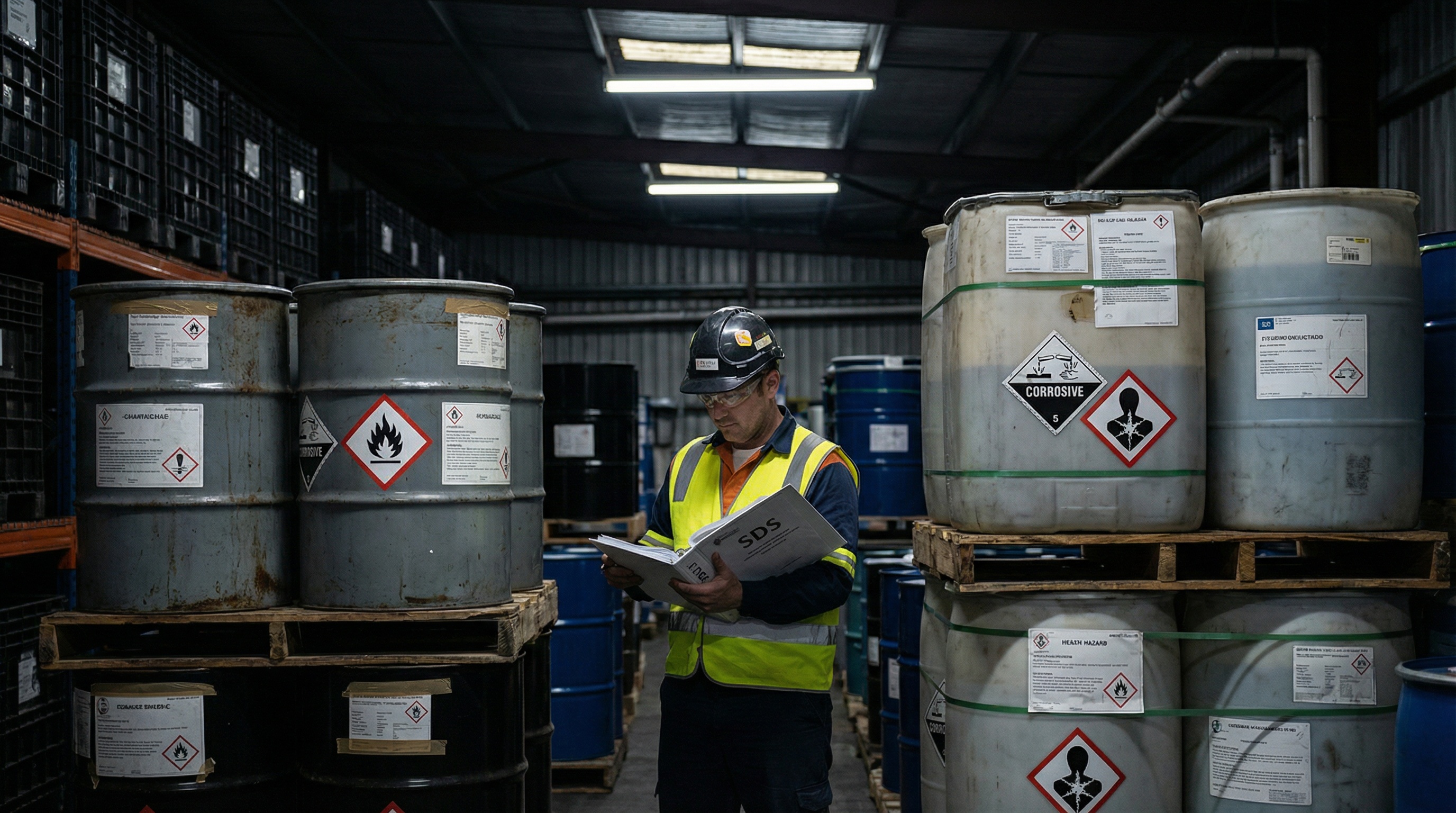
SDS (formerly MSDS) must be accessible and available in the appropriate language.
They include details on composition, first aid, safe handling, and emergency measures.
3️⃣ Proper Labeling
Chemical containers must have labels with:
⚠️ Product identifier
⚠️ GHS hazard pictograms
⚠️ Signal words ("Danger" or "Warning")
⚠️ Precautionary statements
4️⃣ Employee Training
Workers must be trained on:
- How to read labels and SDS
- Specific hazards of the chemicals they handle
- Required personal protective equipment (PPE)
5️⃣ Written Hazard Communication Program
Employers must have a formal written plan detailing HazCom compliance.
It should include emergency procedures and employer responsibilities.
Consequences of Non-Compliance
OSHA penalizes companies that fail to comply with HazCom. Penalties include:
- Fines up to $15,625 per violation (higher for repeat offenses).
- Temporary shutdowns until violations are corrected.
- Legal liability if accidents occur due to lack of training.
Tips for Successful HazCom Implementation
✔ Keep SDS and chemical inventories up to date.
✔ Train employees at least annually.
✔ Use clear labels in workers' preferred language.
✔ Conduct internal audits to ensure compliance.
The Hazard Communication Standard (HCS) isn’t just a legal requirement—it’s a critical tool for protecting worker health. Proper implementation reduces risks, improves productivity, and avoids costly fines.
If your workplace uses hazardous chemicals, don’t wait for an accident to happen! Ensure HazCom compliance and maintain a safe work environment.