Technical Foundations of the Pillar
This pillar is supported by three key elements of the process safety management system:
- Process Hazard Analysis (PHA):
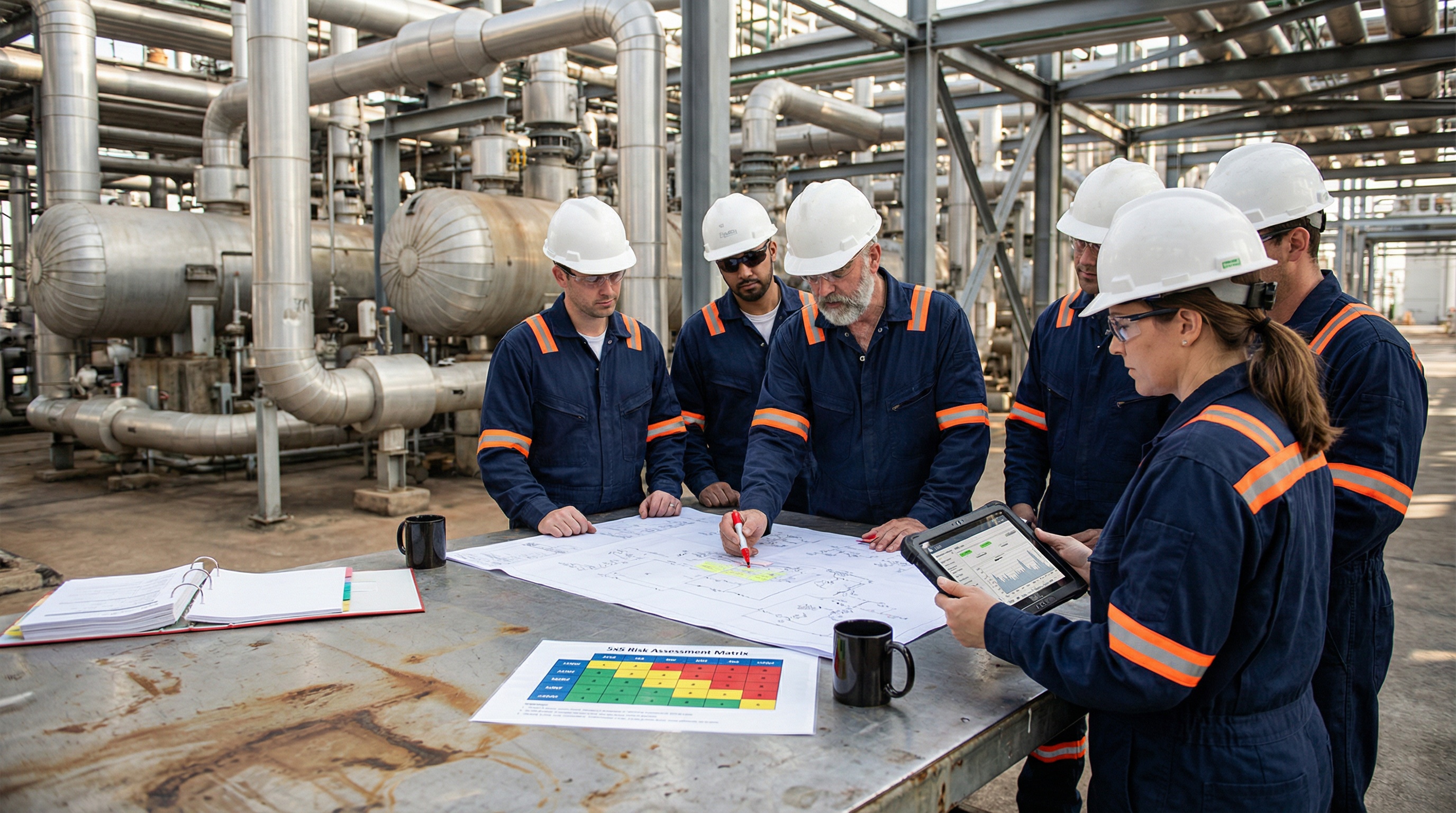
Structured methodologies such as HAZOP, What-If, FMEA, and LOPA are applied to identify operational deviations, equipment failures, and human errors that could trigger hazardous events. The quality of a PHA depends on the multidisciplinary expertise of the team and the periodic updating of the analysis. - Quantitative Risk Assessment (QRA):
Mathematical models and simulations are used to estimate the frequency and consequences of scenarios such as explosions, fires, or toxic releases. This enables organizations to establish risk tolerability criteria and justify investments in mitigation measures. - Hazardous Materials Characterization:
A thorough understanding of the physicochemical properties of substances (flash point, vapor pressure, acute toxicity, chemical reactivity) is essential to anticipate behavior under abnormal conditions.
Complementary Tools and Approaches
- Consequence Modeling: Software such as PHAST, ALOHA, or DNV GL tools allows visualization of gas dispersion, overpressure zones, and thermal radiation effects.
- Incident Databases: Platforms such as ARIA or eMARS support learning from past events to prevent recurrence.
- Vulnerability Assessment: This involves analyzing potential impacts on people, assets, and the environment, considering factors such as population density, evacuation routes, and physical barriers.
Impact on Operational Management
Understanding hazards and risks enables organizations to:
- Design more robust protection systems (SIS, relief valves, secondary containment).
- Optimize operational and maintenance procedures.
- Justify engineering decisions based on ALARP (As Low As Reasonably Practicable) principles.
- Strengthen safety culture through increased workforce awareness.
This pillar is not merely a documentation phase within the process lifecycle; it is an ongoing exercise in critical analysis, technical review, and continuous improvement. In high-risk industries such as chemical, petrochemical, and pharmaceutical sectors, understanding hazards and risks is the first step toward controlling the uncontrollable.